
We are very thankful to the National Observer, which is doing phenomenal work in supporting volunteer journalism across the country. They provide free tools for research, making it easier for us to understand the work of our city council in the context of what other Ontario councils are doing, and they give useful and informative seminars on media issues.
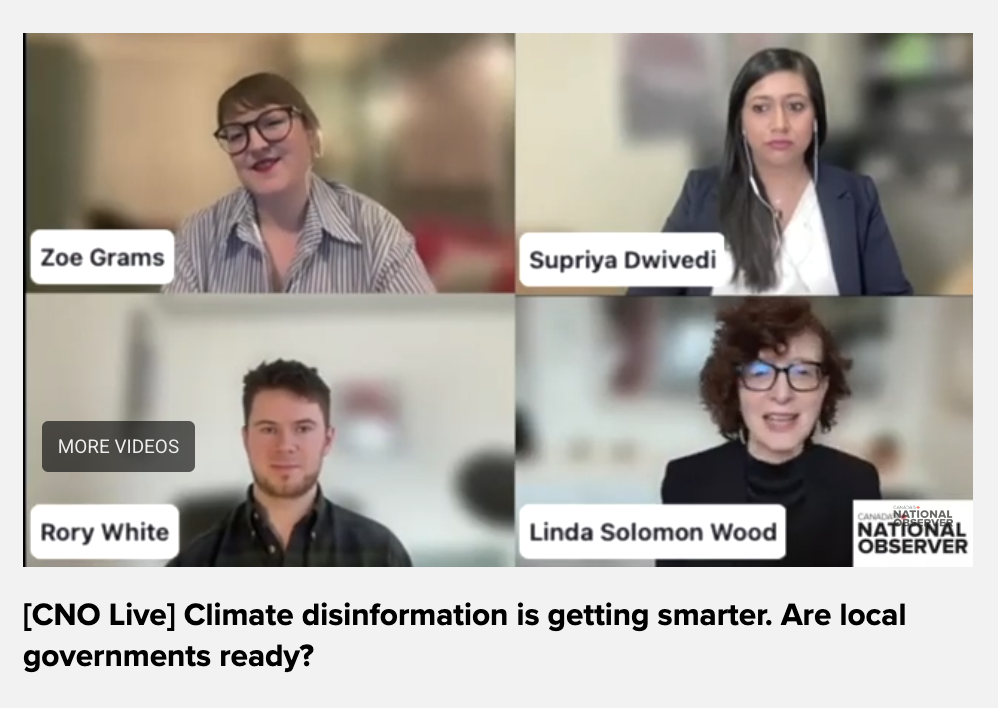
The last Observer seminar our group attended had to do with manipulation of the media, and we found it very unsettling, particularly since we are in the middle of planning for an all-candidates meeting for the fall election. We learned that AI is being used to mislead municipal councillors and spread environmental misinformation, and the tools being used are appearing with increasing speed. This is a deadly serious topic, but with all that’s going on in the world, it is not getting enough attention.
You might reply that accounts like these are a good reason to stay off social media, and you’d be right, but these are planned campaigns, an orchestrated message that is still being broadcast to your community. You can’t avoid it.
The good news is that there are people who are waking up to the threat of propaganda. An example of this is in Caledon, where one resident, Cheryl Connors, began investigating a new Facebook page called “Building Caledon Together.” The page supposedly represented a “citizen-led grassroots group” that promoted Council’s leadership on growth and development issues. Connors was suspicious; the page was slick, the tone was professional, and the ownership of the group was hidden.
Investigations by the Observer traced the images to Harneet Singh, owner of two political strategist consultancies, and former employee of Conservative MP Kyle Seeback and Caledon councillor Mario Russo. He also had professional connections with Mayor Annette Groves.

With municipal elections coming up in six Canadian provinces in 2026, experts warn that “cyborg propaganda” tools could reduce campaigns to battles between humans ventriloquised by chatbots. —Rory White, National Observer
Although “Building Caledon Together” seemed like a healthy grassroots community group, it turned out to be the project of an individual, designed to shape public opinion in support of developer-friendly policies. In fact, the group had ties to another account, “Caledon Central,” which used viral crime posts to build its audience. The use of fear-based content to control audiences is a growing problem in social media.
Is Caledon just a very corrupt city, or are these tactics being used elsewhere? It takes surprisingly few people to run groups like these, and the results can be powerful. We must understand that local democracy now stands on the front line of a much bigger war, where every day it becomes easier to create AI-driven propaganda for anti-democratic purposes.
The good news is that we have the power to counteract these undemocratic influences. We can question sources, verify facts, and discuss issues together openly, making sure all perspectives are heard, and speaking out loudly against anyone who would silence the voices of others. The antidote to disinformation is not retreat, but renewed participation in the political forum.